Backing up PostgreSQL is essential for reliability and disaster recovery. The open-source ecosystem offers several strong tools - each with unique design goals, languages, and ideal use cases.
Below is a curated list of the top PostgreSQL backup solutions, compared across multiple dimensions: language and ideal use cases.
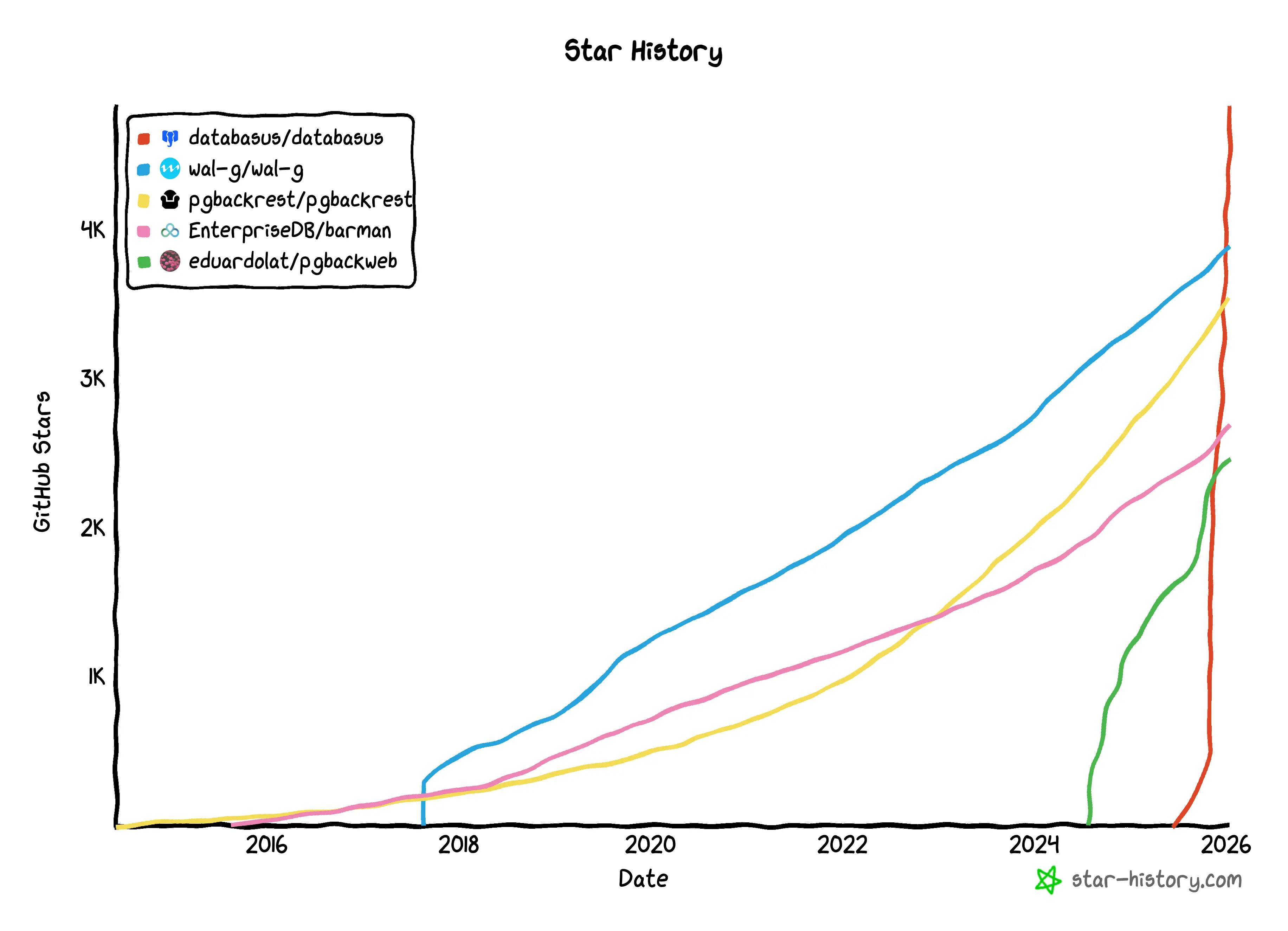
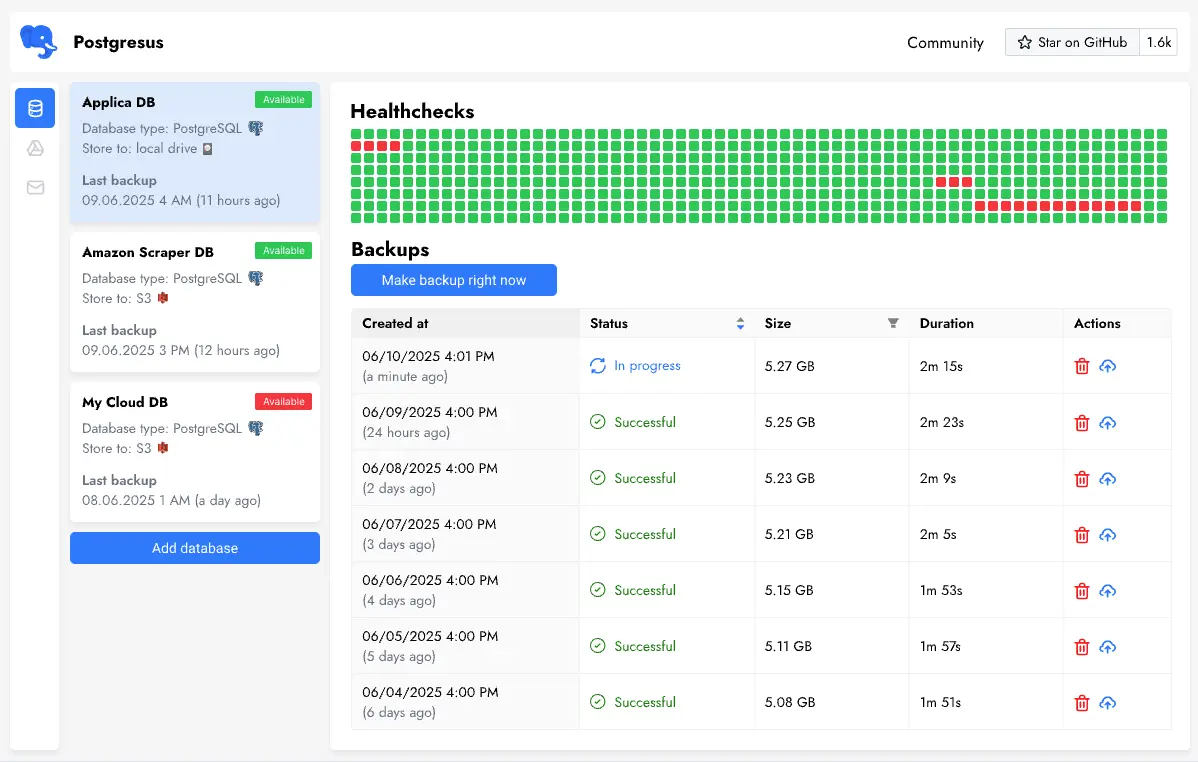
Databasus
- GitHub: https://github.com/databasus/databasus
- Language: Go + TypeScript
- Maintainer: Community
- License: Apache 2.0
- Interface: Web UI
- Supported Databases: PostgreSQL, MySQL, MariaDB, MongoDB
- Best For: Teams needing a self-hosted, web-based backup management solution
Databasus (rebranded from Postgresus) is a self-hosted database backup management tool with a modern web UI. It offers flexible scheduling (hourly, daily, weekly, monthly, or cron), multiple storage destinations (S3, Google Drive, NAS, SFTP), AES-256-GCM encryption, and team features like role-based access control and audit logging. Notifications are supported via email, Telegram, Slack, Discord, and webhooks.
WAL-G
- GitHub: https://github.com/wal-g/wal-g
- Language: Go
- Maintainer: Community
- License: Apache License 2.0
- Interface: CLI
- Supported Databases: PostgreSQL, MySQL/MariaDB, MS SQL Server, MongoDB (beta), Redis (beta)
- Best For: Cloud-native and multi-database environments
WAL-G is an archival and restoration tool for databases in the Cloud, the spiritual successor to WAL-E. It's built for performance, with parallel compression, encryption, and seamless cloud storage integration. Its multi-database support makes it ideal for teams managing mixed database stacks.
pgBackRest
- GitHub: https://github.com/pgbackrest/pgbackrest
- Language: C
- Maintainer: Crunchy Data
- License: MIT License
- Interface: CLI
- Supported Databases: PostgreSQL only
- Best For: Mission-critical, high-performance PostgreSQL workloads
pgBackRest, is designed for speed, reliability, and flexibility. It supports full, differential, and incremental backups with parallel processing, compression, encryption, and seamless cloud storage integration. Trusted by production teams worldwide, it's one of the most capable PostgreSQL backup tools for both on-premises and cloud environments.
Barman
- GitHub: https://github.com/EnterpriseDB/barman
- Language: Python
- Maintainer: EnterpriseDB (EDB)
- License: GNU GPL 3
- Interface: CLI
- Supported Databases: PostgreSQL only
- Best For: Enterprises requiring centralized backup management
Barman (Backup And Recovery Manager) is an open-source administration tool for disaster recovery of PostgreSQL servers written in Python. It allows your organisation to perform remote backups of multiple servers in business critical environments to reduce risk and help DBAs during the recovery phase.
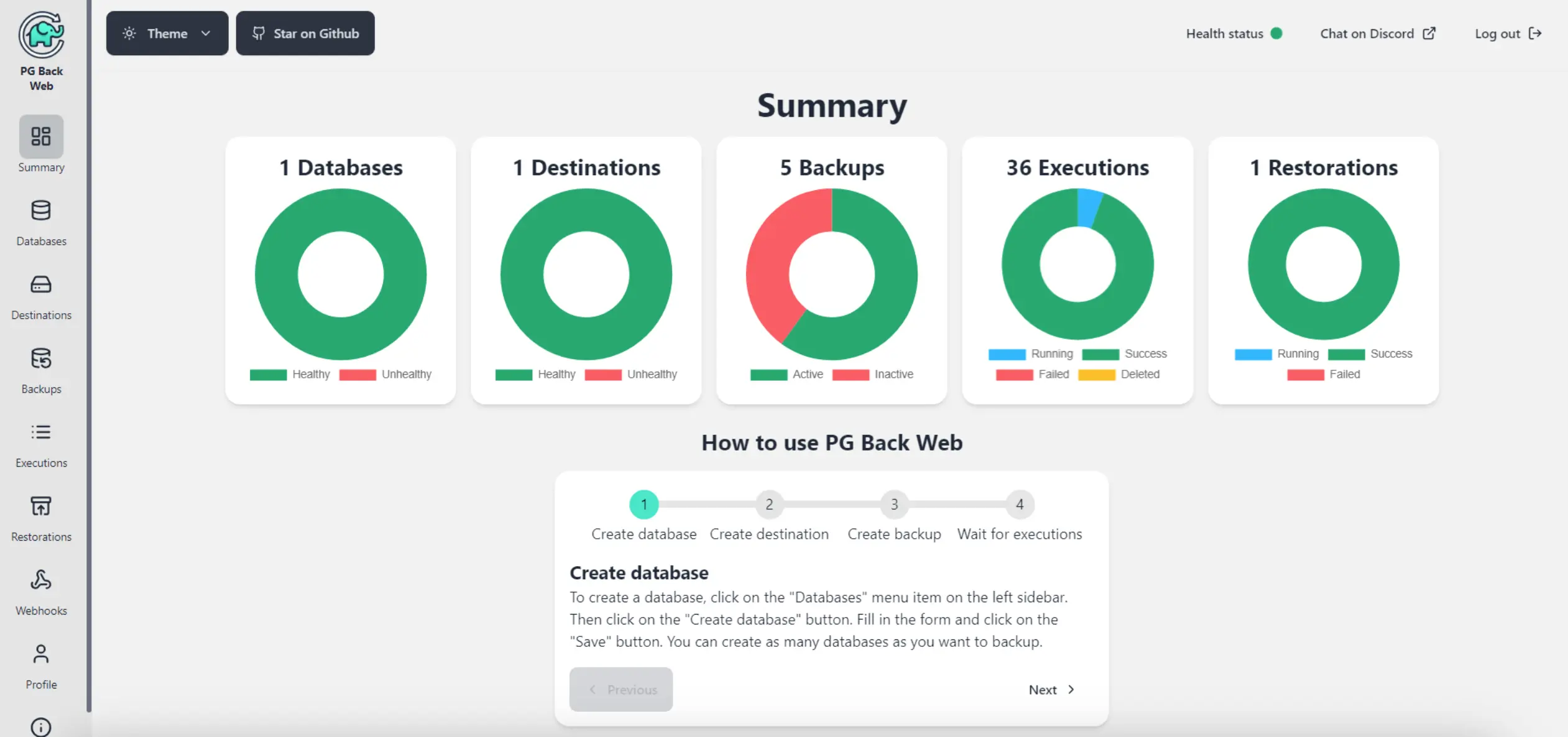
pgBackWeb
- GitHub: https://github.com/eduardolat/pgbackweb
- Language: Go + JavaScript
- Maintainer: Community
- License: AGPL-3.0
- Interface: Web UI
- Supported Databases: PostgreSQL (via pgBackRest)
- Best For: Teams preferring visual management for pgBackRest backups
pgBackWeb provides a user-friendly web dashboard on top of pgBackRest. It enables visual monitoring, restore operations, and scheduling — ideal for smaller teams or users who prefer GUI-based workflows instead of the command line.
Comparison Table
| Tool | Language | License | Interface | Multi-DB Support | Cloud Storage |
|---|---|---|---|---|---|
| Databasus | Go + TypeScript | Apache 2.0 | Web UI | ✅ | ✅ |
| WAL-G | Go | Apache 2.0 | CLI | ✅ | ✅ |
| pgBackRest | C | MIT | CLI | ❌ | ✅ |
| Barman | Python | GNU GPL 3 | CLI | ❌ | ✅ |
| pgBackWeb | Go + JavaScript | AGPL-3.0 | Web UI | ❌ | ✅ (via pgBackRest) |
Choosing the Right Tool
- Databasus — great for teams wanting a self-hosted web UI with multi-database support.
- WAL-G — best for multi-database, cloud-native setups.
- pgBackRest — the most complete solution for high-performance and cloud-integrated PostgreSQL.
- Barman — fits enterprise environments with strict compliance.
- pgBackWeb — ideal if you prefer a GUI for pgBackRest.
Each project offers a unique trade-off between simplicity, scalability, and ecosystem support. Pick based on your environment’s scale, cloud strategy, and team expertise.